

The Durie Hill Elevator, built to provide transport to and from Durie Hill in Wanganui, is a rare and innovative example of public transport. In 1910 Durie Hill became part of the Wanganui Borough, and the Council faced the problem of providing public transport to the settlement on the hill. A cable car system was initially proposed but found to be too expensive, and eventually an alternative solution, an elevator up through the hill, was agreed upon.
The complex, including elevator and tunnel, was originally designed by Messrs J. Ball and E. Crow and intended to be a public enterprise. However, Wanganui ratepayers were not prepared to take the bear the financial risk of the project, and a private company, the Durie Town Elevator Co., was formed to take over the scheme. The principals of this firm were Col. A. E. Wilson and W. J. Polson. Construction of the elevator began in 1916 by contractors Maxwell and Mann. This included the excavation of a tunnel (205m long, 3m high and 2.7m wide), and an elevator shaft (66m high), ending in a 9.7m flat-topped tower. The tunnel and shaft were lined with reinforced concrete. It was opened on 2 August 1919 by Mrs W. Polson. The maximum fares had been set by the Council at adults 4d up and 2d down, and children 3d up and 1d down. The original fare for twelve trips (six up and six down) was one shilling. Initially the elevator was powered by the tramway electricity supply of 500 volts D.C. When the tramway system was removed from the city, a rectifier was acquired to convert the A.C. current from the national electricity grid to the required 500 D.C.
The construction of the elevator enabled the development of the Durie Hill Garden Suburb in 1920. This suburb was planned by the architect Samuel Hurst Seager, and is considered to be the first modern New Zealand suburb. The elevator continued to be operated by the company until 1 June 1942 when control passed to the Wanganui City Council, which continues to operate the complex today.
The Durie Hill Elevator Shaft and Tunnel was a unique solution to the problems of providing public transport in the days before the motor vehicle was common-place. Its installation enabled the establishment of a new suburb. Today the elevator remains a popular form of transport both for the residents of Durie Hill and for tourists wishing to enjoy the views of the city of Wanganui, the Whanganui River, and beyond.
The complex, including elevator and tunnel, was originally designed by Messrs J. Ball and E. Crow and intended to be a public enterprise. However, Wanganui ratepayers were not prepared to take the bear the financial risk of the project, and a private company, the Durie Town Elevator Co., was formed to take over the scheme. The principals of this firm were Col. A. E. Wilson and W. J. Polson. Construction of the elevator began in 1916 by contractors Maxwell and Mann. This included the excavation of a tunnel (205m long, 3m high and 2.7m wide), and an elevator shaft (66m high), ending in a 9.7m flat-topped tower. The tunnel and shaft were lined with reinforced concrete. It was opened on 2 August 1919 by Mrs W. Polson. The maximum fares had been set by the Council at adults 4d up and 2d down, and children 3d up and 1d down. The original fare for twelve trips (six up and six down) was one shilling. Initially the elevator was powered by the tramway electricity supply of 500 volts D.C. When the tramway system was removed from the city, a rectifier was acquired to convert the A.C. current from the national electricity grid to the required 500 D.C.
The construction of the elevator enabled the development of the Durie Hill Garden Suburb in 1920. This suburb was planned by the architect Samuel Hurst Seager, and is considered to be the first modern New Zealand suburb. The elevator continued to be operated by the company until 1 June 1942 when control passed to the Wanganui City Council, which continues to operate the complex today.
The Durie Hill Elevator Shaft and Tunnel was a unique solution to the problems of providing public transport in the days before the motor vehicle was common-place. Its installation enabled the establishment of a new suburb. Today the elevator remains a popular form of transport both for the residents of Durie Hill and for tourists wishing to enjoy the views of the city of Wanganui, the Whanganui River, and beyond.
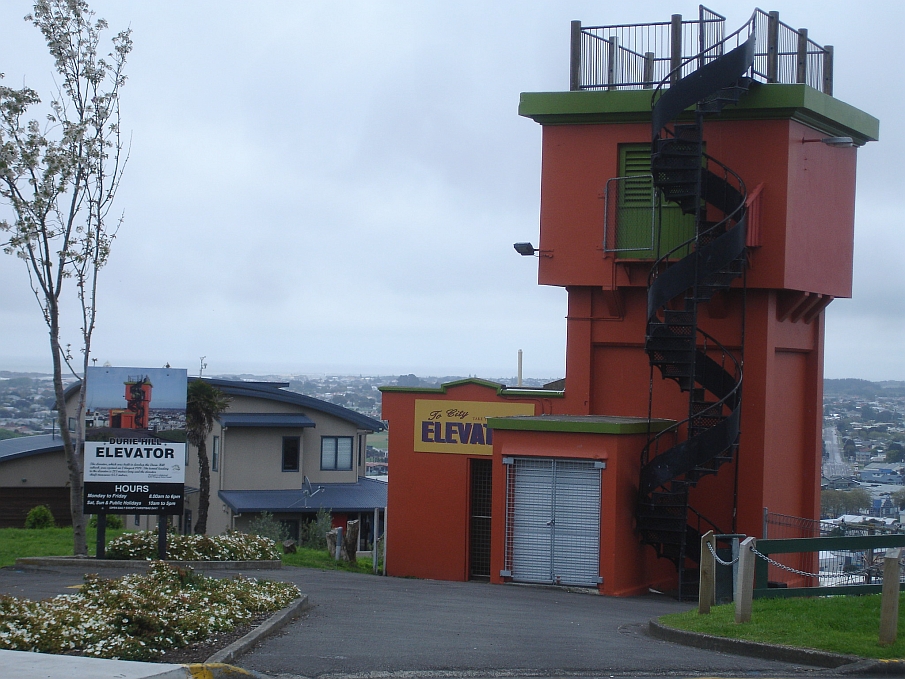
Durie Hill Elevator Shaft and Tunnel, Whanganui. Shaft CC BY-NC-SA 2.0 Image courtesy of www.flickr.com | Ellen Fitzsimons | 11/10/2011 | Ellen Fitzsimons
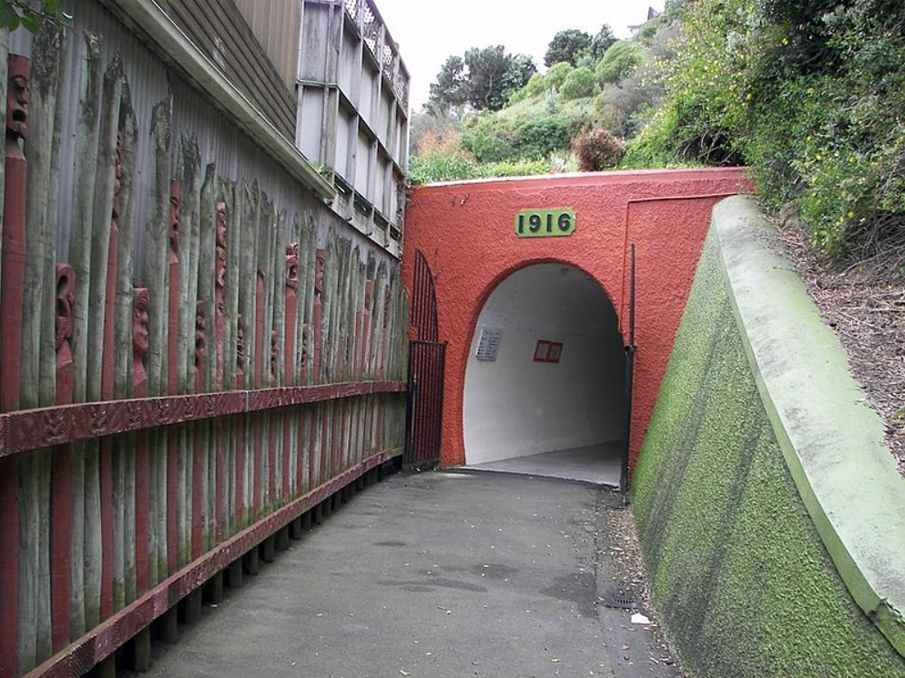
Durie Hill Elevator Shaft and Tunnel, Whanganui. Tunnel entrance. CC BY-SA 2.0 Image courtesy of www.flickr.com | Ian Armstrong | 08/10/2011 | Ian Armstrong
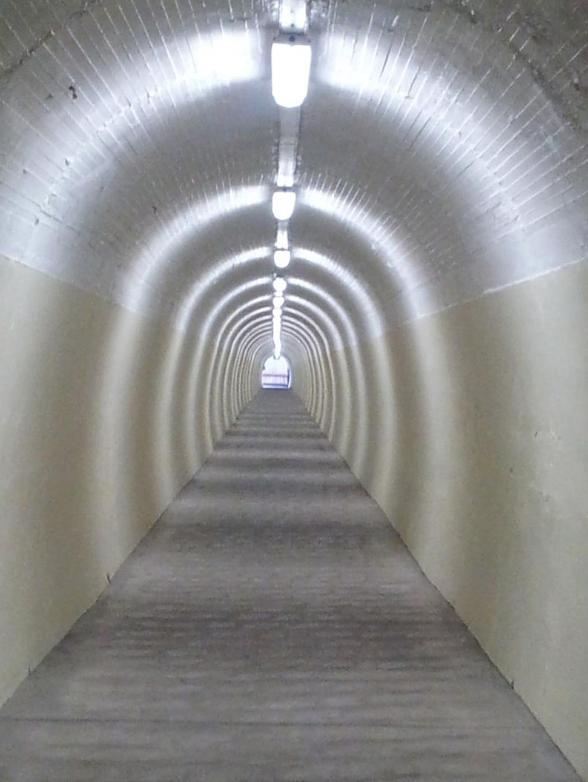
Durie Hill Elevator Shaft and Tunnel, Whanganui. Tunnel. CC BY-SA 2.0 Image courtesy of www.flickr.com | Ian Armstrong | 08/10/2011 | Ian Armstrong
Durie Hill Elevator Shaft and Tunnel, Whanganui. Shaft CC BY-NC-SA 2.0 Image courtesy of www.flickr.com | Ellen Fitzsimons | 11/10/2011 | Ellen Fitzsimons
Durie Hill Elevator Shaft and Tunnel, Whanganui. Tunnel entrance. CC BY-SA 2.0 Image courtesy of www.flickr.com | Ian Armstrong | 08/10/2011 | Ian Armstrong
Durie Hill Elevator Shaft and Tunnel, Whanganui. Tunnel. CC BY-SA 2.0 Image courtesy of www.flickr.com | Ian Armstrong | 08/10/2011 | Ian Armstrong
